Road Technologies
High-performance pavement overlay systems engineered for durability, surface friction and long service life on asphalt and concrete.
EkoSeal® HPPCO — High Performance Polymeric Composite Overlay
A polymer-modified cementitious surface treatment designed to be applied over both asphalt and concrete. EkoSeal is impervious to UV and to all types of aeronautical and primary automotive fluids, and is salt- and water-resistant. It is suitable for pedestrian, aviation or vehicular traffic. EkoSeal bonds securely to old or new asphalt or concrete, letting users restore deteriorated pavements or improve surface friction. It also bonds to itself when maintenance patching is required.
Benefits
- Long life and long-term durability
- Rapid setting / short downtime
- Friction coefficients matched to the application
- Works on both asphalt and concrete
- Aesthetically pleasing
- Cost-effective alternative to other seal-coat materials
- UV stable
- Excellent wear resistance
Applications
- Alternative to seal coats and slurry seals
- High-friction areas such as taxiways, runways and roadways
- Oxidized or eroded asphalt
- Pavements with oil-spot damage
- Protection of new asphalt before deterioration starts
- Refueling areas
Testing
The US Army Corps of Engineers at the Waterways Experiment Station in Vicksburg, Mississippi tested EkoSeal (HPPCO) under extreme conditions. Results included: multiple pivot steers of an M-60 tank weighing over 100,000 lbs with no delamination (only slight surface scuffing of broadcast sand); de-icing chemicals showed no observable scaling; and fuel resistance per ASTM D2939 at 1/8" coating thickness — the test was stopped after 120 hours with no penetration.
EkoSeal vs Asphalt
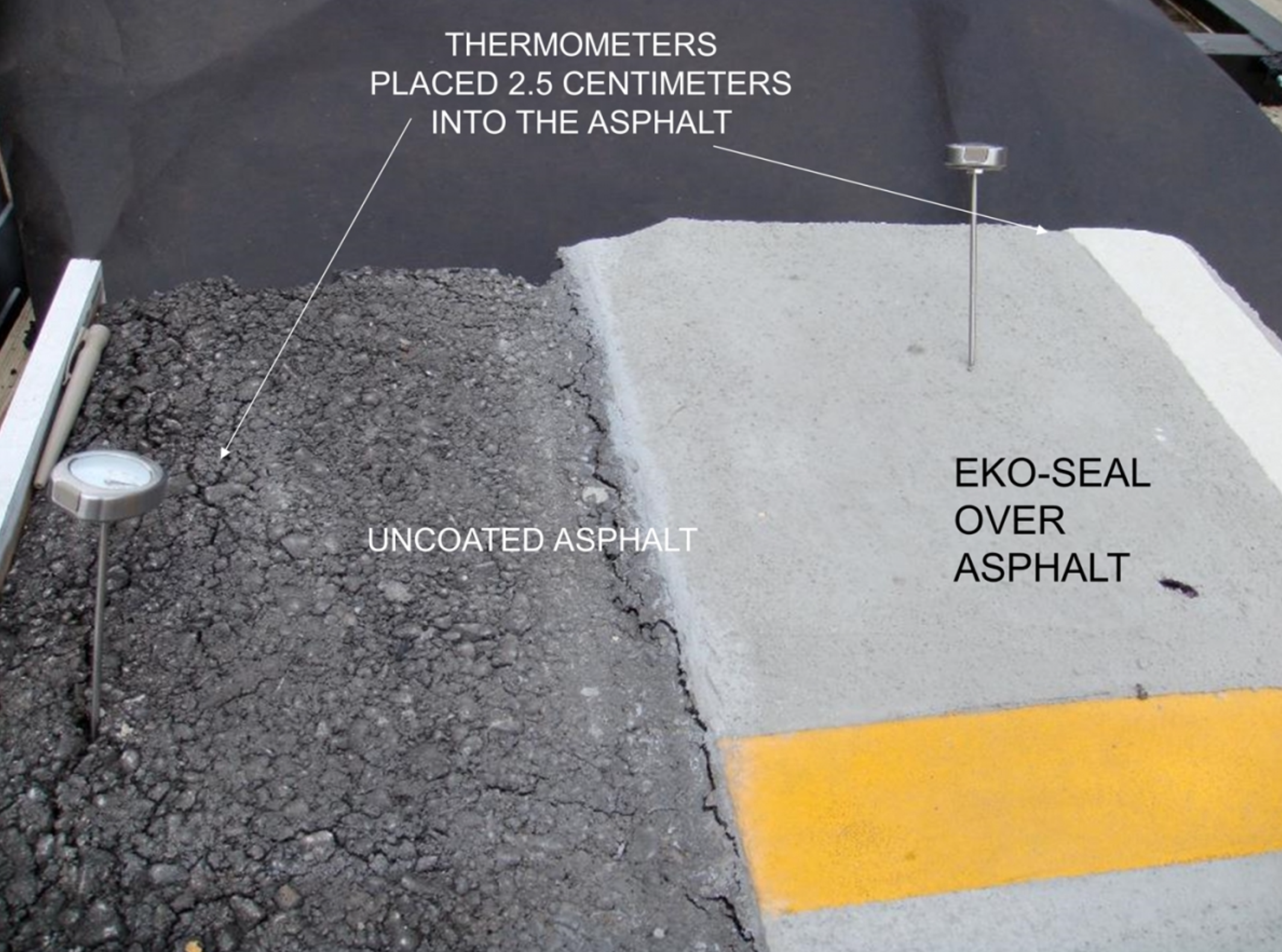
EkoSeal and asphalt are both used for paving roads, but they differ in key ways. EkoSeal is an overlay that needs no milling to install — a high-performance polymeric concrete overlay made from cement, water, gravel or crushed stone, and other proprietary materials. Asphalt, by contrast, is a mixture of bitumen, sand and gravel.
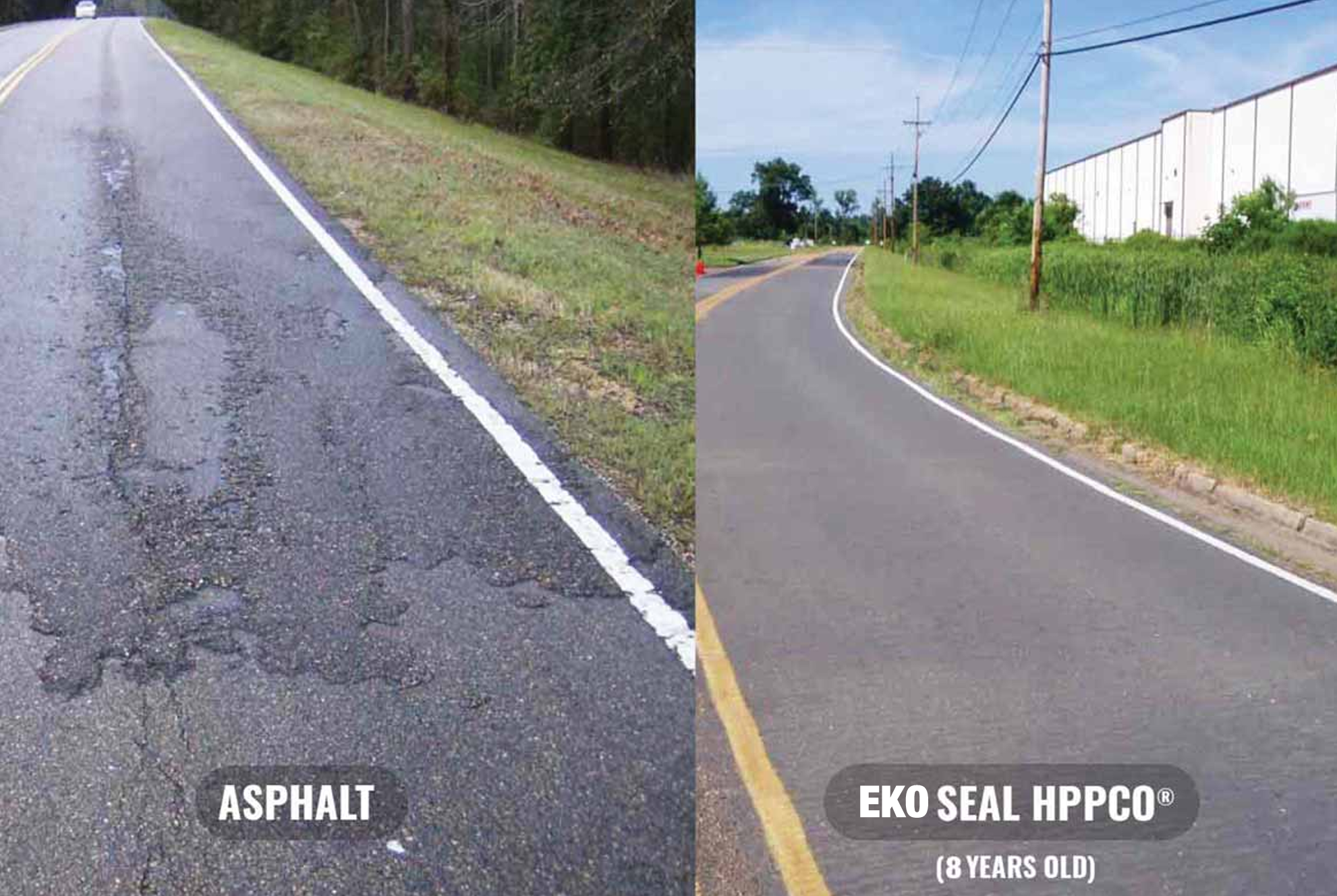
EkoSeal is generally more durable and longer-lasting than asphalt. It is easy to maintain and can endure for more than 15 years; even the older, simpler version still maintains pavement integrity after 20+ years when worn, whereas asphalt begins to oxidize after the first year.
Price comparison depends on location, material availability, market conditions and project requirements. Key considerations:
- 1
Initial cost — EkoSeal may appear more expensive up front, as it uses cement and nanoparticles (typically pricier than the bitumen used in asphalt). It can require less labor and specialized equipment, and costs vary by country. Asphalt installation is time-consuming, and road closures/traffic disruption affect the true cost depending on the route's importance.
- 2
Long-term cost — Despite a higher initial cost, EkoSeal's durability and wear resistance mean less maintenance and repair over its lifespan, often lowering long-term cost versus asphalt.
- 3
Maintenance cost — EkoSeal still needs periodic sealing and crack repair; material and labor costs are similar to or slightly lower than asphalt, depending on local labor rates.
- 4
Availability & local factors — Relative prices depend on local material availability and market conditions, which vary by region. Obtain local pricing and consult suppliers or contractors for accurate estimates.
The decision should not rest on price alone. Consider intended use, durability requirements, expected traffic volume, local climate and project constraints, and consult pavement professionals to determine the most suitable, cost-effective option. Detailed cost should be determined locally by first obtaining asphalt pricing and comparing it to EkoSeal rates.